

Spotify is introducing an AI Persona badge for artist profiles whose identities are entirely or primarily generated with artificial intelligence and do not represent real people.
The first labels are expected to appear on the platform from mid-September 2026. Spotify says the change is intended to help listeners distinguish real artists from fictional AI-generated personalities.
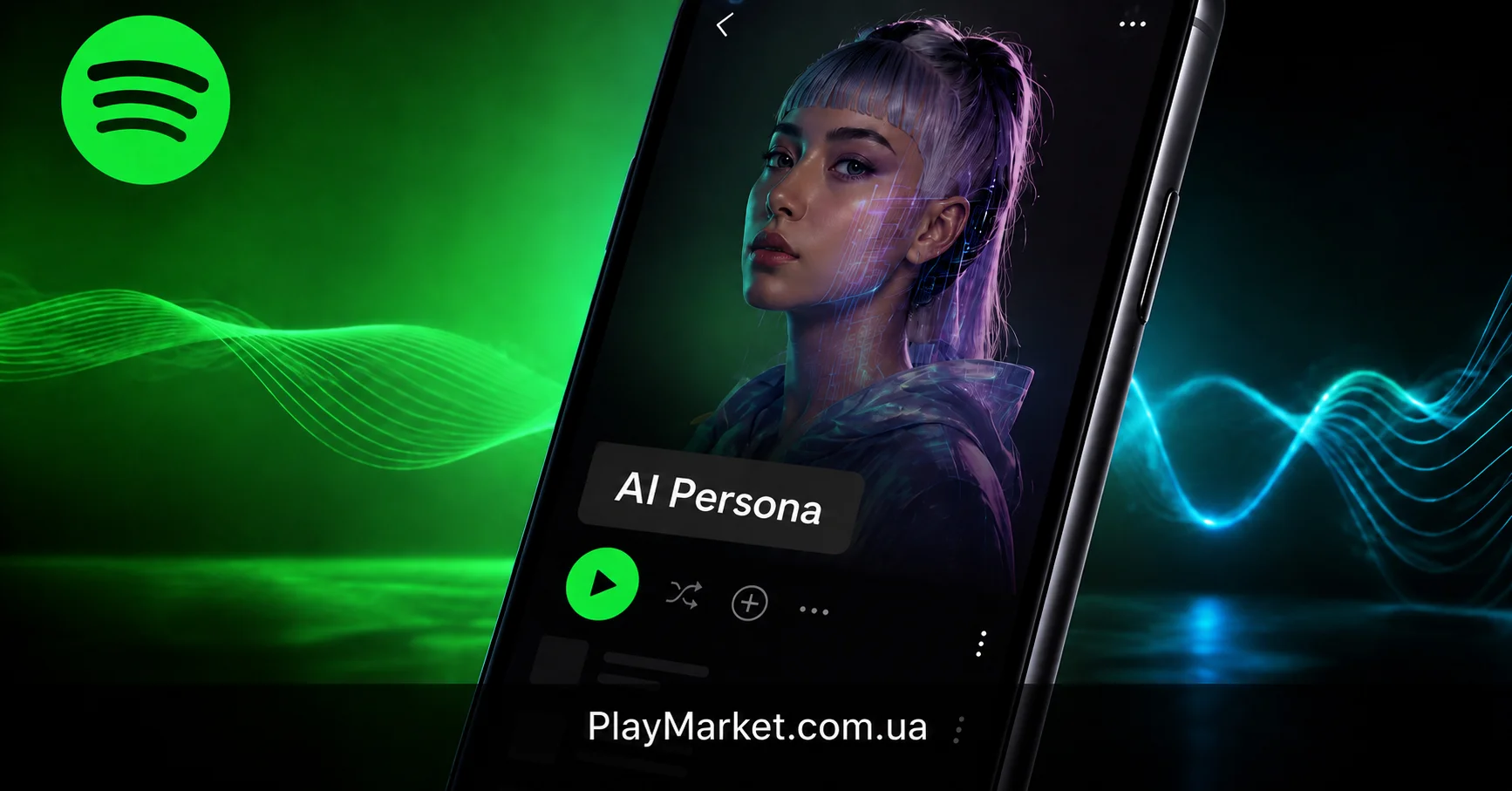
What the AI Persona badge means
An AI Persona badge will indicate that the identity presented by an artist profile may be artificially generated. This is different from simply using AI to process audio, write lyrics or create cover artwork.
A virtual artist might have a fictional name, generated portrait, invented biography and synthetic voice, even though no person matching that image and story actually exists.
The label will give listeners more context before they assume that a profile represents a real musician with a genuine public identity.
Spotify is not banning AI music
The new badge does not mean Spotify is banning music created with artificial intelligence. The company recognizes that AI can be used at different stages of production, including vocals, instrumentation, composition and post-production.
Spotify is separately supporting AI credits that can disclose where the technology was used in a particular recording.
The distinction is important: AI credits describe how a song was made, while the AI Persona badge describes the identity behind the artist profile.
Receiving the badge does not automatically mean that the music will be removed. Content must still comply with Spotify’s rules, respect intellectual property and avoid impersonating real artists without authorization.
Verified by Spotify identifies authentic artists
Spotify previously introduced its Verified by Spotify program. The badge indicates that an artist profile has been reviewed and meets the platform’s criteria for authenticity and trust.
Spotify considers sustained listener activity, compliance with platform policies and signs of a real artistic presence, such as concerts, merchandise, official websites and linked social accounts. Profiles that primarily represent AI-generated artists are not eligible for verification.
The platform is therefore building two clearer signals: verified profiles associated with real artists and transparent labels for fictional AI personas.
Why Spotify needs these labels
Generative tools can now produce songs, voices, photographs and artist biographies in minutes. As a result, streaming services are receiving growing amounts of music credited to performers who do not exist outside their profiles.
The concern is not limited to creative experimentation. Artificial personas can mislead listeners, imitate established musicians, contribute to low-quality music spam or attempt to collect royalties that might otherwise go to legitimate artists and songwriters.
Spotify has already strengthened its rules against unauthorized voice cloning and is developing additional systems to identify mass-uploaded spam.
What changes for listeners
Users will not need to enable the feature manually. When Spotify identifies an applicable profile, the AI Persona label will appear as part of the artist information.
The badge will not answer every question about how a recording was produced, but it will provide useful context. Listeners can then decide whether it matters to them that no real performer exists behind the profile’s voice, image and biography.
Spotify is not rejecting AI-assisted music. Instead, it is taking a step toward ensuring that artificially created personalities are not easily mistaken for real people.
Source: Spotify Newsroom.