“Where did you buy that?” can be the most useful question beneath a video. A viewer notices a laptop stand, a lip tint or a lamp that makes a room feel warmer, then tries to identify the exact item. Often that means visiting the creator’s profile and searching through a collection of links. Instagram’s latest shopping update shortens that journey.
On November 16, the platform launched an Amazon integration for eligible US creators. Affiliate products can be attached directly to Reels and feed posts, allowing creators to earn from purchases that qualify under the program. For readers elsewhere, this is a development to watch rather than a promise that the same feature is already available in their account.
What shopping from a Reel looks like
According to Social Media Today’s coverage of the launch, a Reel can include up to 30 products and a feed post up to 20. Connecting Amazon Influencer lets Instagram automatically attach affiliate links to tagged Amazon products.
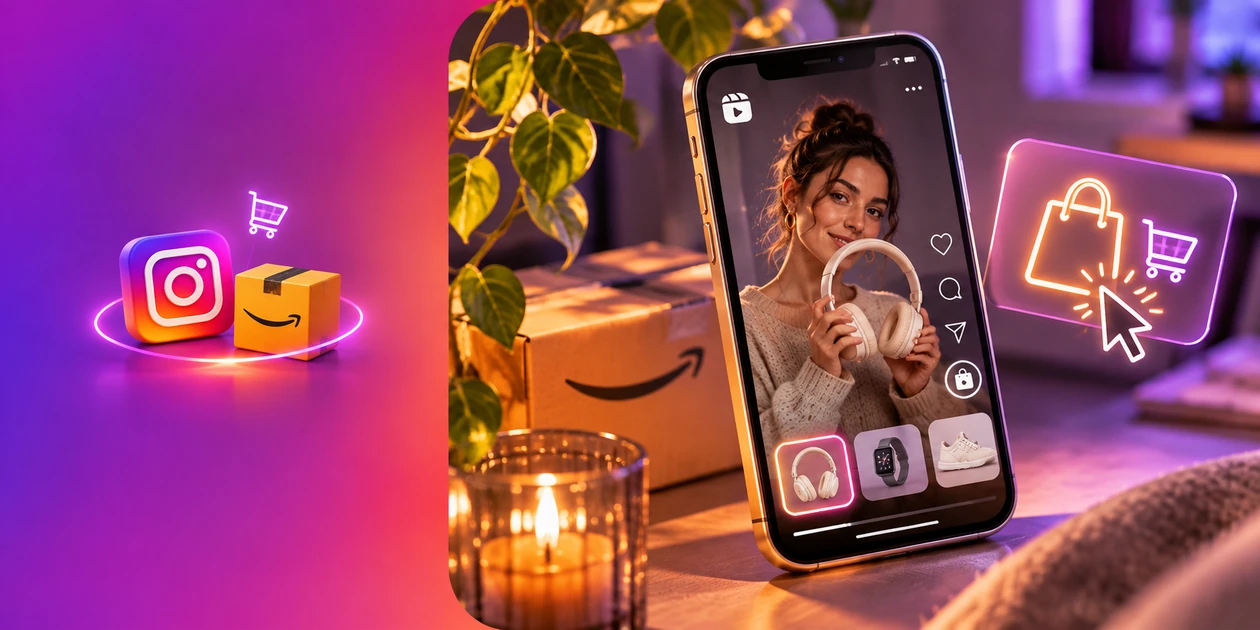
Instagram’s demonstration image shows a small product card beside a beauty video. Tapping it opens a sheet containing two items. The viewer can connect the product being demonstrated with a store listing, rather than guess which profile link the creator meant. The shopping journey then continues to Amazon.
Consider a desk-setup video. A creator explains why they chose a particular lamp, shows its light in the evening and attaches the matching product. The recommendation and the opportunity to check the price sit together. This is an illustrative use case, not a claim that we tested the feature ourselves.
The convenience is easy to understand. People can investigate an item while they still remember what attracted them to it. They do not have to reconstruct the recommendation after leaving the video and opening a separate list.
Who can connect an account
WIRED’s launch report identifies US residence, adulthood and a professional account with more than 1,000 followers as requirements.
The Keyword’s explanation of the integration gives the connection route as Professional dashboard → Monetization → Affiliate programs, followed by Amazon Influencer Program. Products are attached through Add products when preparing content. It also distinguishes the wider availability of ordinary product linking from eligibility for the Amazon connection.
That distinction matters for an international audience. Seeing a product in someone else’s video, buying from Amazon and earning through this new integration are separate activities. Access to one does not automatically establish access to the others. Before planning a commercial content series, creators should check the programs offered in their own professional dashboard.
A click is not a commission
Instagram does not take a share of affiliate earnings, MediaPost reports from Adam Mosseri’s announcement. That does not turn every product tap into a payment.
Under the Amazon Associates operating agreement, commission depends on qualifying purchases or other eligible actions under the program. Amazon sets those conditions. A click, an order and a confirmed commission represent different stages.
Creators therefore need to look beyond reach. A video might attract a large audience because its story is entertaining without creating much interest in the featured item. A smaller video answering a specific purchasing question may be commercially useful. This is a way to interpret performance, not a forecast of earnings from the new tool.
A sensible first experiment would feature a few products the creator genuinely understands. Explain the strengths, show the limitations and make it clear who would benefit. Having space for 30 products does not make filling every slot a good editorial decision. An oversized selection can leave viewers less certain about the recommendation.
The same applies to a comparison. If the video promises to explain two alternatives, it should give the audience enough information to understand the difference before asking them to shop.
The commercial relationship should be visible
Amazon’s guidance on affiliate disclosures requires a clear disclosure near affiliate links and identification of the account’s participation in the program. Automatic product linking does not remove those obligations.
For shoppers, that context matters. A creator can sincerely like an item while also earning from sales. Making both facts visible helps the audience assess the recommendation. A useful review still needs to explain suitability, practical advantages and drawbacks encountered in use.
Before ordering, shoppers should check the exact model, included accessories, seller and final delivery cost. A product card makes the item easier to find; the purchase page remains the place to verify what is actually being offered.
The change goes beyond a new button
The clearest benefit is that a recommendation sits closer to a buying decision. Creators spend less time directing people to a link elsewhere, and viewers can more easily investigate something that caught their attention.
Our assessment is that the integration will be most useful when the underlying content already helps people choose. A thoughtful demonstration gains a convenient next step. A video built entirely around pressure to buy still needs a reason to be watched. For creators, preserving that reason—and the audience’s trust—will matter more than how many products they can attach.