
Google has unveiled Pixel Tag, its first branded tracker for locating personal belongings. The small tag can be attached to keys or placed inside a wallet, bag or suitcase, with its location displayed in the Find Hub app on Android.
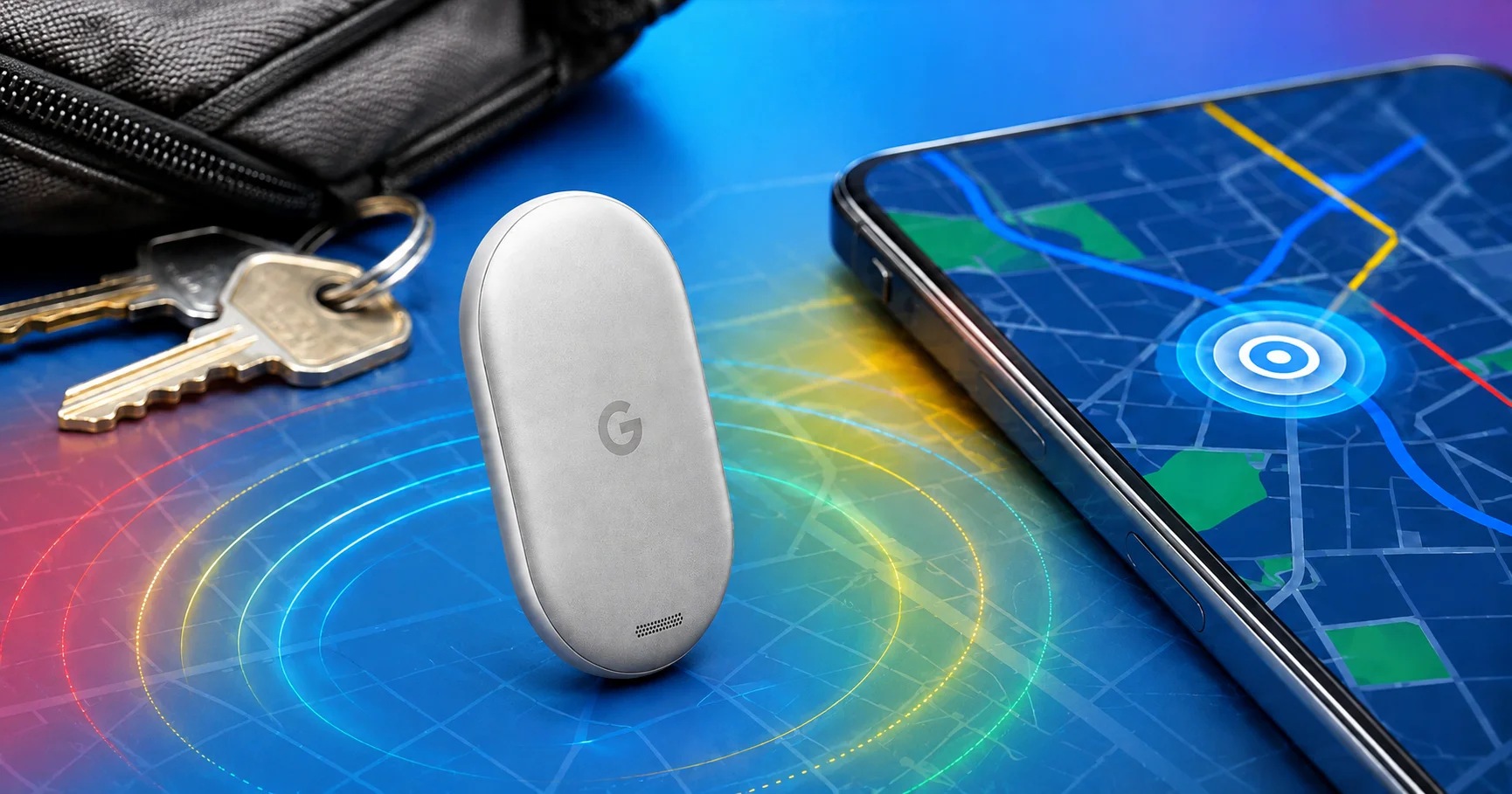
The device gives Android users a more deeply integrated alternative to third-party Bluetooth trackers and a direct rival to Apple’s AirTag.
How Google Pixel Tag works
Pixel Tag connects to Google’s crowdsourced Find Hub network, which uses nearby Android devices to help locate missing items. If a tagged item is lost outside Bluetooth range, compatible Android devices in the area can anonymously detect it and send encrypted location information to the network.
When the item is nearby, users can make the tag play a sound or use visual guidance to find it more precisely. Direction and distance guidance may depend on the hardware available in the connected phone.
The button on Pixel Tag also works in reverse. Pressing it can make a misplaced phone ring, even when it is the phone rather than the tagged item that needs to be found.
Easy setup with Fast Pair
To connect the tracker, users remove its battery tab and hold it close to a device running Android 9 or later. Fast Pair automatically displays the setup instructions on the phone.
The tag can then be given a recognizable name, such as “Keys,” “Wallet” or “Suitcase.” Connected tags and devices are managed through the Find Hub app.
Despite the Pixel branding, a Google phone is not required for the tracker’s basic functionality. Pixel Tag works with compatible Android devices, although individual features may vary by phone, region and software availability.
Share a tag with family members
A Pixel Tag can be shared with up to 10 people. This makes it suitable for household keys, shared luggage, bicycles or other items used by several family members.
Everyone with access can view the tag in Find Hub and help locate the missing item without transferring ownership of the tracker.
Protection against unwanted tracking
Google says Find Hub protects location information with end-to-end encryption. Android also provides unknown tracker alerts designed to warn users when an unfamiliar Bluetooth tracker appears to be moving with them over time.
These protections are important because compact location trackers can potentially be misused to follow people without their knowledge.
Durable design and replaceable battery
Pixel Tag is made from durable stainless steel and carries an IP67 rating for dust and water resistance. Its built-in speaker plays a sound to help users locate an item hidden nearby.
Battery life is rated at up to one year. The battery is user-replaceable, allowing the tracker to remain in service instead of being discarded when its original battery runs out.
Pixel Tag price and release date
Google Pixel Tag will go on sale on November 11, 2026. It will cost $29 for a single tracker or $99 for a pack of four in the United States.
With straightforward Android setup, Find Hub integration, a replaceable battery and family sharing, Pixel Tag could become one of the most accessible AirTag alternatives for Android users.
Source: Google’s official blog.