
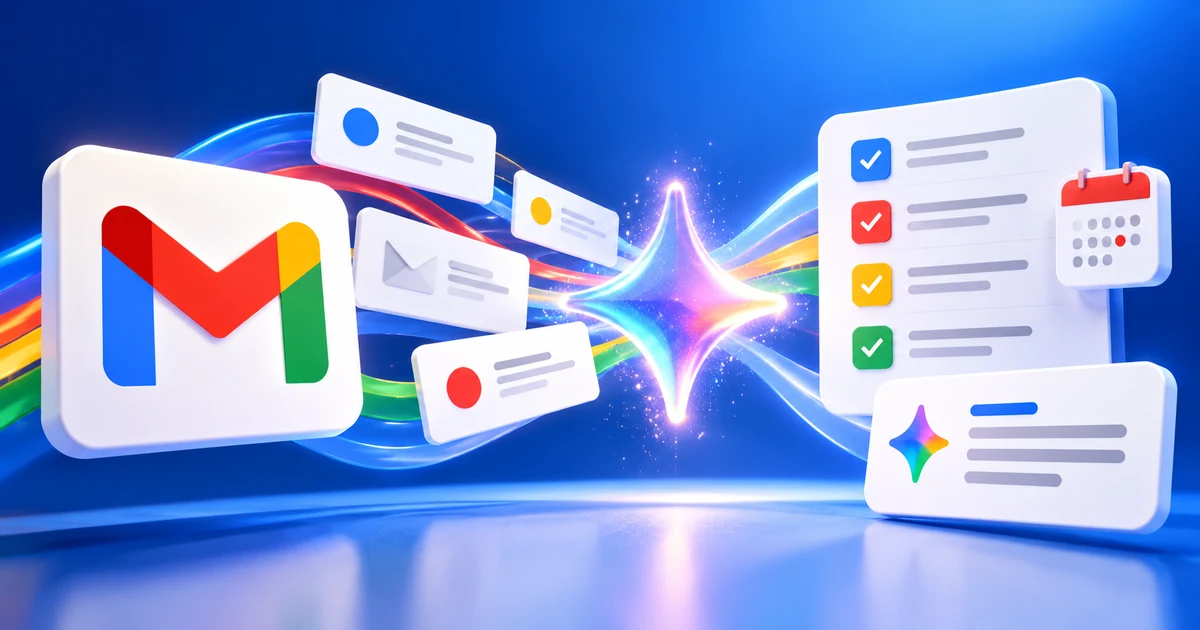
Google is rolling out AI Inbox to more paid Workspace users. The Gmail section pulls potential action items and deadlines from email conversations and offers brief updates on topics spread across multiple threads.
Google announced the expansion on October 15, 2026, in its Workspace Updates blog. AI Inbox remains in beta and is currently limited to users in the United States with their language set to EN-US.
What appears in AI Inbox
Suggested to-dos highlights messages that appear to require action. It can bring a follow-up or deadline buried in a long exchange to the top of the list.
Topics to catch up on summarizes significant updates across related email threads, helping a user see recent decisions or changes without opening every message individually.
Users can open the source message for context and mark a suggested to-do as done in AI Inbox. Google describes these as items within the AI Inbox interface; it has not said that they are automatically added to Google Tasks.
What AI Inbox leaves out
According to Gmail Help, the feature draws from messages in the Primary tab. It does not surface information from Social or Promotions, spam, or messages that have been archived, deleted, muted or snoozed.
Attachments, delegated inboxes and encrypted email are not supported. As a result, an AI Inbox summary may omit information that matters to a particular task. Users can open the underlying message to check the details.
Availability and rollout dates
The current expansion includes eligible paid Workspace editions such as Business Standard and Plus, Enterprise Standard and Plus, and Frontline Plus. Google also lists Starter and education editions among eligible plans, but notes that their rollout will follow in the coming months.
Deployment began on October 12 for Rapid Release domains and is scheduled to start on October 26 for Scheduled Release domains. Google says each gradual rollout can take up to 15 days before the feature is visible.
Eligible users can find AI Inbox in Gmail’s menu on desktop or mobile. Workspace smart features must be enabled, and the first suggestions may take up to seven days to appear. Google has not announced a date for availability outside the US.